
“WHO FRAMED ROGER RABBIT” (1988) REVIEW
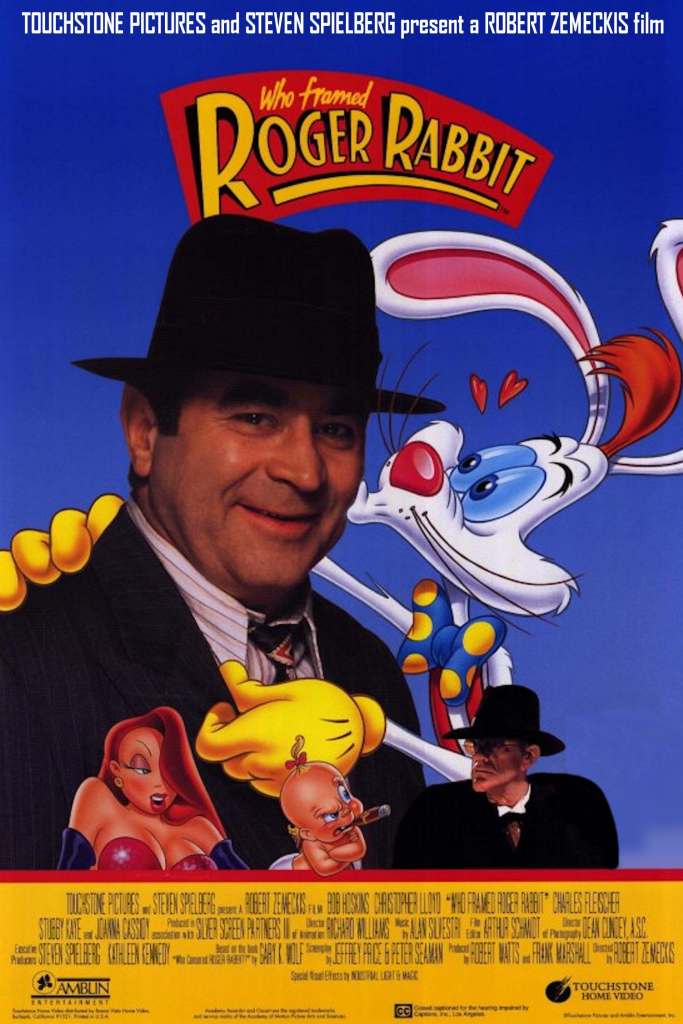
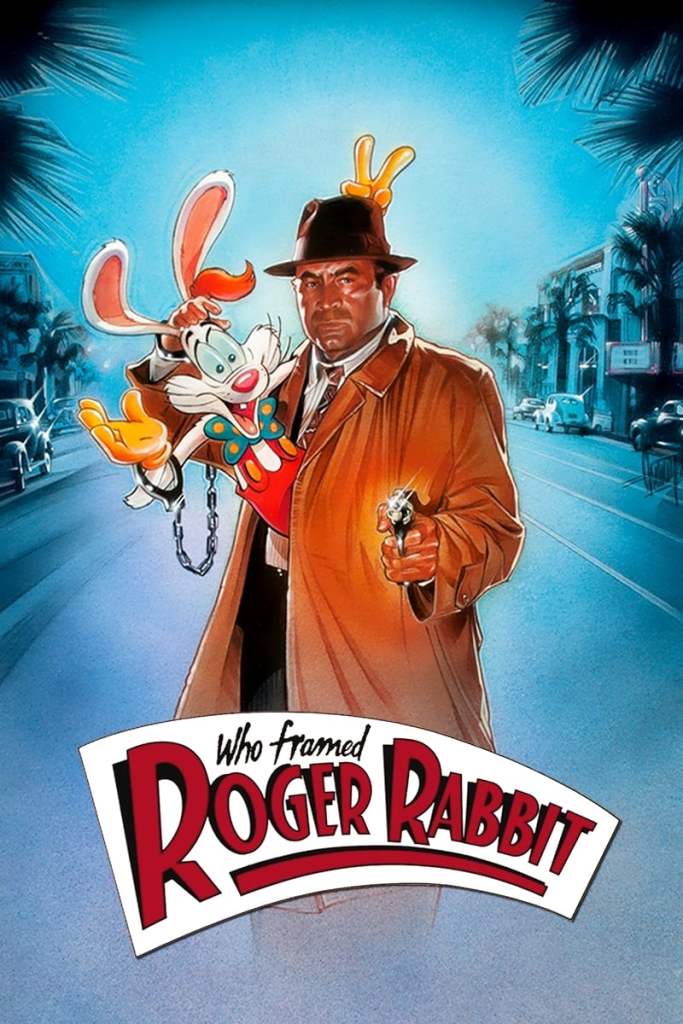
WHO FRAMED ROGER RABBIT (Robert Zemeckis, 104 min, color, 1988)
What’s Happening: Murder mystery in 1940s Hollywood where cartoon characters live for real
Famous For: Perfect synchrony among live and animated characters
Hugely ambitious, highly original, very complicated to produce, and very expensive to create, Roger Rabbit was also – happily – hugely popular with fans and critics alike, and it stands, decades later, as a monument of 80s genre cinema.
Animated characters had interacted with live actors before (most notably in Disney’s Song of the South), but never scene after scene on such a grand scale. The Noir mystery plot is decent enough, but the real joy is watching classic cartoon (“Toon”) characters – all your Disney and Warner Brothers favorites, plus many more – gallivanting around a lovingly recreated 1940s Hollywood, poking people, jumping on people, splashing in water, dropping things, even smashing through windows and walls in the “real” world.
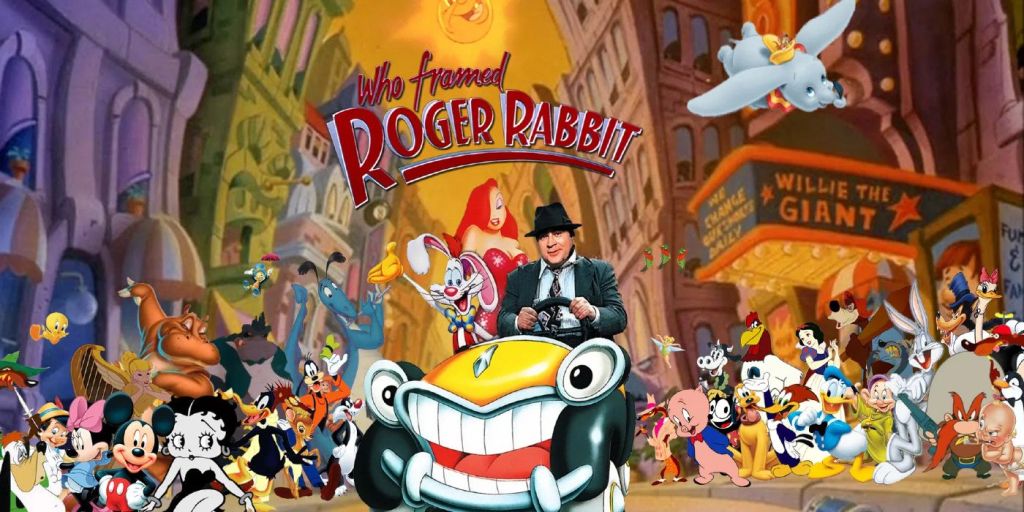
Their home is the all-animated Toontown (a sort of happy ghetto), but the Toons freely move back and forth between their town and ours. The interplay between the living and animated worlds never ends, and it’s incredible.
Most viewers won’t mind (or even notice) the absence of Popeye, Tom and Jerry, and other cartoon characters for which Disney and co-producer Steven Spielberg were unable to obtain legal permissions. The Toontown sequence lasts only six minutes, but you remember it like it was 30.
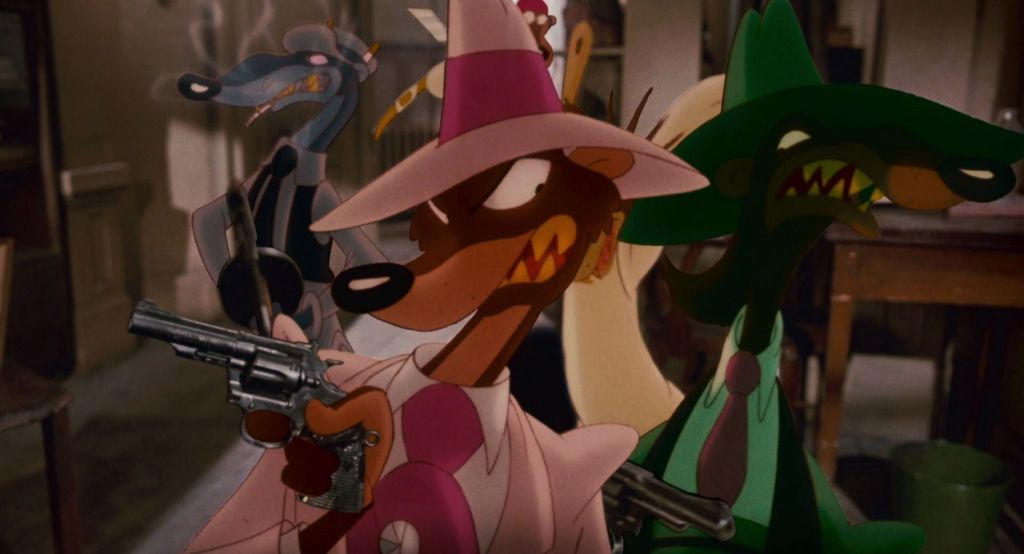
Aside from the convoluted Noir plot, the only noticeable blemish is Roger himself. Charles Fleischer is fine as Roger’s voice (“p-b-b-b-b-please!!!” is inimitable); it’s just that the character is a little too drooling and pathetic. You sympathize with him, but you don’t really laugh with him.
Luckily, our main character is the grumbling, cynical, down-on-his-luck private investigator Eddie Valiant. He used to love Toons… but after one bad Toon killed his brother, Eddie becomes prejudiced against all Toons. It takes a long time, but it’s great to watch, as Eddie overcomes his prejudices and recognizes that Roger was framed.
The Disney/Spielberg co-production had been in the works since 1981 before Zemeckis (fresh off Back to the Future) was brought in to direct. Richard Williams (most famous for the animated 1971 Christmas Carol) was brought in to direct the animation.
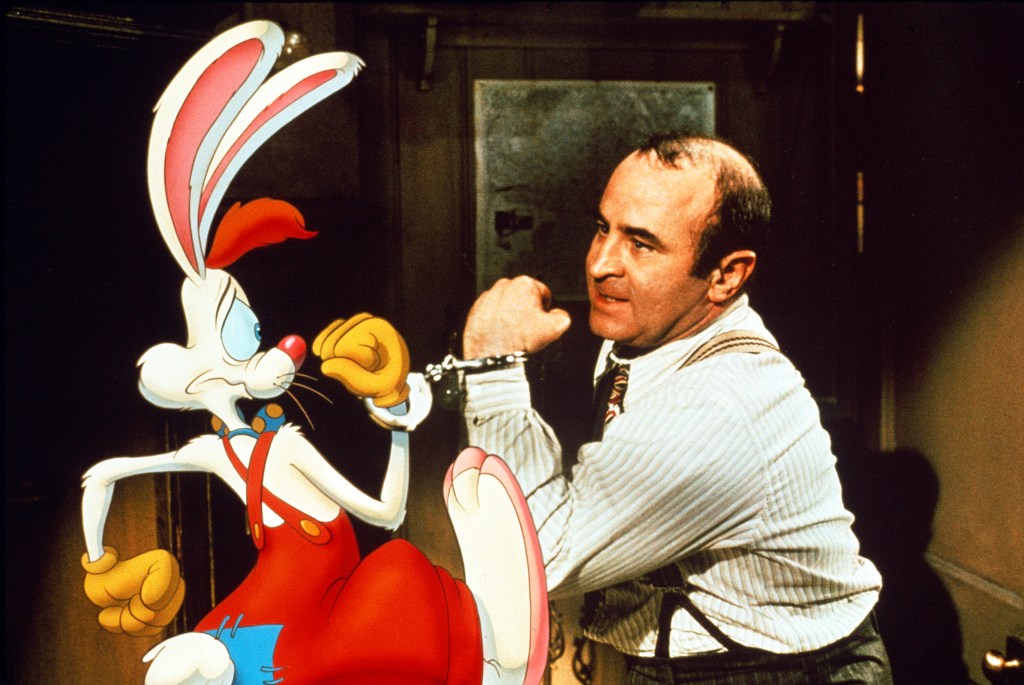
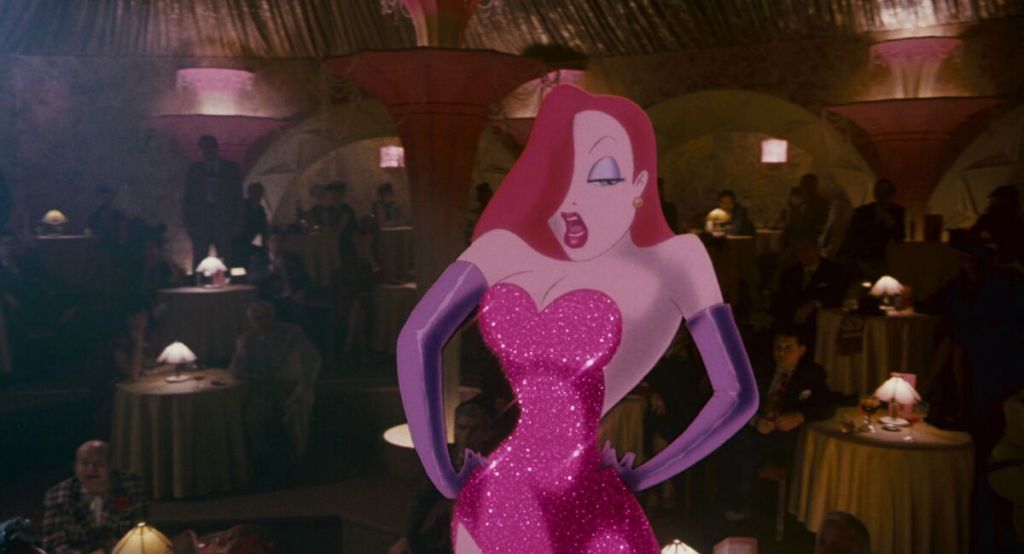
Remarkably, all the animation was the classic cel kind although CGI was available at the time. Jessica Rabbit’s glittery dress looks CGI but was actually a plastic bag (!) with light shone through it.
Sources differ on the costs, but it was probably about $60 million which would make it the most expensive picture ever produced up to its time. It grossed more than $300 million, making it the #2 film of 1988 behind Rain Man.
Kathleen Turner had the honor of voicing Jessica Rabbit, the most beautiful cartoon character ever. In 2006, she voiced the ugliest cartoon character ever for Monster House (a Spielberg/Zemeckis production). Bob Hoskins was known for the unusual Mona Lisa before Eddie became his most famous role. Christopher Lloyd, just before the Back to the Future sequels, demonstrated his acting range in making Judge Doom so frightening, like an evil Puritan.

Mel Blanc died at 81 a year after Roger Rabbit was released. It’s wonderful to hear him voicing his famous characters one last time, as it is wonderful to see Disney teaming up with Warner Brothers although the studios were actually fierce rivals back in the real 1940s Hollywood.
Fans still debate whether Jessica shows her underwear – or more – when she flies out of the cab after the Toontown escape. I have my doubts; it looks like a shadow or color flaw to me. You can freeze frame or search online and decide for yourself.
There are two serious subtexts. The first is worry over old-fashioned civic loyalty and personality losing out to greed and commercialism. Perhaps it’s ironic hearing such worries voiced by the massive Disney corporation, but Disney wisely downplayed its role in the production, releasing the picture via Touchstone.
The second serious subtext is the necessity of humor. “If you don’t have a good sense of humor,” we learn, “you’re better off dead.” Sometimes humor is what we need most, and when Roger senses that people around him are in dire need of humor, he’s willing to risk himself to make them laugh. Perhaps we are “laughing to keep from crying,” but wouldn’t we all prefer laughing most of the time?
Note that Roger Rabbit is PG-13, with action enough for kids but plenty of smutty double-entendres for adults. Ralph Bakshi’s Cool World (1992) is a sort of R-rated imitator, but it should have been more daring.
Action: 7. Gore: 6. Sex: 6. Quality: 9. Camp: 9.
Don’t miss: Donald Daffy duet
Quotable lines: “My whole purpose in life is to make people laugh.” and “I’m not bad…”
Article text copyright 2025 David Elroy Goldweber
 Claws & Saucers
Leave a comment