
Here’s a combo review of the first three (1980s) SILENT NIGHT, DEADLY NIGHT Christmas horrors…
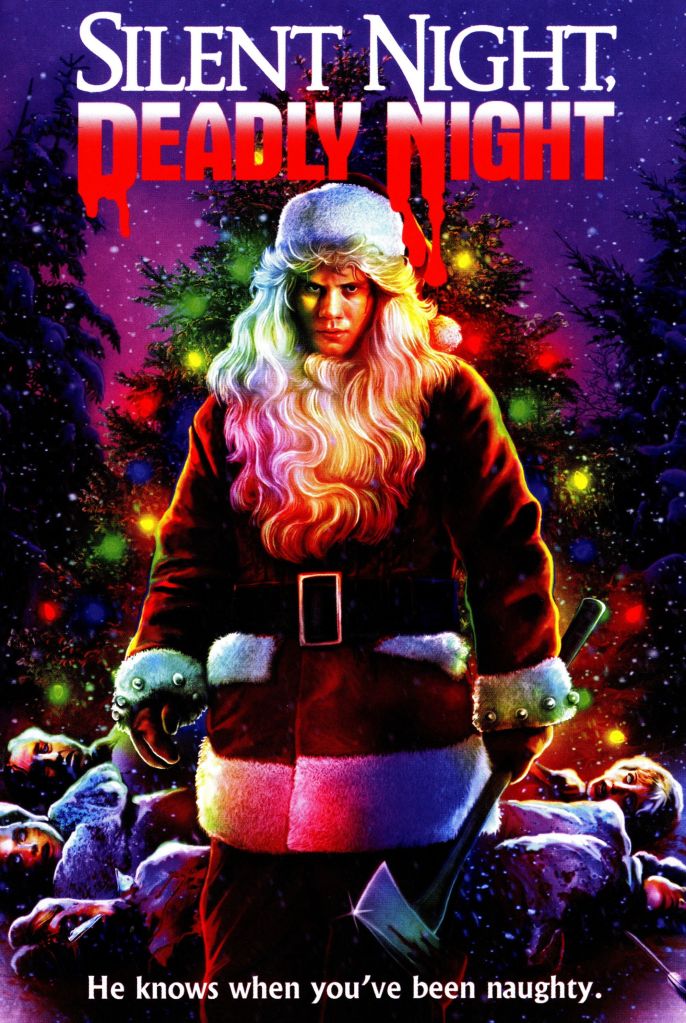
SILENT NIGHT, DEADLY NIGHT (Charles E. Sellier Jr., 85 min uncut, color, 1984)
What’s Happening: Traumatized on Christmas Eve, boy grows into Killer Santa
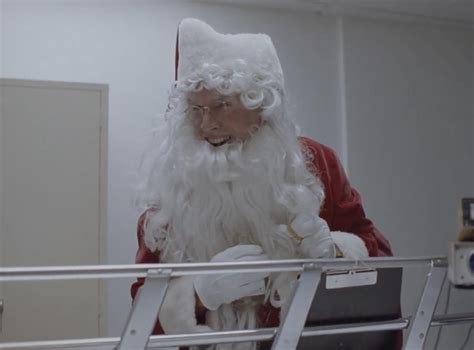
Famous For: Most famous Killer Santa in horror film history
I won’t argue that creating this kind of movie isn’t immoral. I will argue that if you’re going to do it, you might as well do it right.
And while director Sellier claimed he didn’t know what he was doing (having been forced to make the film due to an expiring studio contract), he certainly did something right – because what we have here is a hilarious, offensive, sleazy, gory, gratuitous Christmas horror-camp classic.
Though the film was a hit upon release, critical reaction was so harsh that TriStar actually pulled it from theaters after a mere two weeks. Siskel and Ebert, and indeed all mainstream reviewers, considered it nothing more than shameful junk.

You can easily see what the fuss was about. It’s not simply combining traditional Christmas cheer – songs, decorations, toys, parties, lights, activities – with sleaze and gore. It’s doing this in front of children (child characters in the movie and, inevitably, the actual young children who play these characters) – that really got foes wound up.
But the inclusion of children makes two key scenes – the attack on the parents that traumatizes young Billy and, later, the attack on the Mother Superior – truly tense and frightening. Other scenes are campy, but the camp does not ruin the tension and fear.

You also can’t blame the filmmakers for the sleaze if you place the film in the slasher tradition. Slasher fans expect to see oversexed teens getting it on – that’s part of why they’re watching. Deadly Night is generous to the point of gratuitousness, with twice as much nudity as a typical slasher.
I also loved the acting.
Robert Brian Wilson (in by far his most famous performance) adds just the right notes of sympathy for us to understand how Billy could become what he fears. Gilmer McCormick (in her most famous performance) is serious and likeable as the sweet nun who looks out for Billy over the years. Linnea Quigley (topless as usual) dies, we might say, by reindeer. Character actress Lilyan Chauvin gives what’s possibly the film’s best performance as Mother Superior – overly harsh on young Billy yet hoping to set him straight.

Note the great opportunities that were taken – the ominous nutcrackers, the death beneath the still-operating mechanical Santa, the dripping axe at the snowman, and many more. Several Christmas items are involved in the killings.
The rhythm occasionally falters (like with flashbacks that become repetitive or with the conversation between the cop and Mother Superior that goes too long) but action comes often. Good soundtrack too.
Five sequels followed (1987-2012) and all are poorly regarded. But “you better watch” this original.
Brian Bankston, in a Cool Ass Cinema review posted 12/14/16 observes how times have changed since the picture’s release: “Nowadays… there wouldn’t be a fuss over a Santa Claus who kills people; only irate objection to seasonal iconography and, of all things, the utterance of ‘Merry Christmas’. The image of an axe-wielding Santa killing people no longer offends; it is now the religious connotations the holiday represents that sends some reeling in horror as if a cross had just been raised to Dracula.”
Let’s hope that in the future we can balance these poles: let us enjoy mischievous Christmas camp-horror pictures here and there during the Christmas season, and let us also enjoy the season itself – all of it, with Nativity scenes, with Baby Jesus, with Mary and Joseph, with the humble Shepherds and humbled Wise Men, with the marvelous Angels, and a Merry Christmas to all, and God Bless Us Every One.
See also Christmas Evil which also features an obsessed, nerdy loner who turns into a Killer Santa yet remains sympathetic.
Action: 7. Gore: 7. Sex: 6. Quality: 8. Camp: 7.
Don’t miss: Jabba the Hut, Smurfs, and other toys from the 80s
Quotable line: “Christmas Eve is the scariest damn night of the year!”

SILENT NIGHT, DEADLY NIGHT PART 2 (Lee Harry, 88 min, color, 1987)
What’s Happening: Billy’s younger brother Ricky also becomes a Killer Santa
Famous For: Unappreciated sequel to the incredible original
What made the first film great was the perfect mixture: the sympathy and connections that you experienced alongside tension, fear, and exploitation.
Not so with this sequel which is purposefully nasty and satirical. Eric Freeman, in by far his most famous performance, makes Ricky a sneering cussing psychopath with no sympathetic qualities except, perhaps, his tendency to kill jerks more often than innocents.
The direction and script are likewise unsubtle. Extreme close-ups bring us right up to the action. And when we get flashbacks from the previous film (roughly 20 minutes of flashbacks, mostly in the first half), all sympathy for Billy and Mother Superior is excised; we only see their bad sides. There’s even a film-within-a-film about another Killer Santa!
So, fans, if you watch it, just ride the wave. Once you surf past the flashbacks and exposition while Ricky tells his story to a prison psychiatrist, you reach some pretty entertaining new scenes.
I’ll note two creative deaths: one involving an umbrella and another involving jumper cables. This late in the slasher cycle creative deaths are hard to find, and here we get two in one movie. I just wish there was more to do with Christmas.
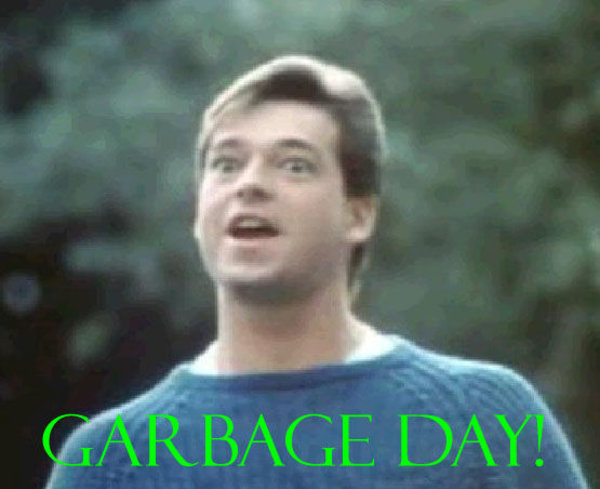
Cool Ass Cinema (article posted Christmas Day 2018) reports that the crew had only $100,000 and seven days to make the new scenes. Clearly, they wasted neither money nor time. “Garbage day!”
Having been pleasantly surprised by Part 2, I approached the third film (Silent Night, Deadly Night III: Better Watch Out, 1989) with high hopes. It’s even directed by Monte Hellman who made the intriguing Beast from Haunted Cave (1959) and the fabulous Two-Lane Blacktop (1971).
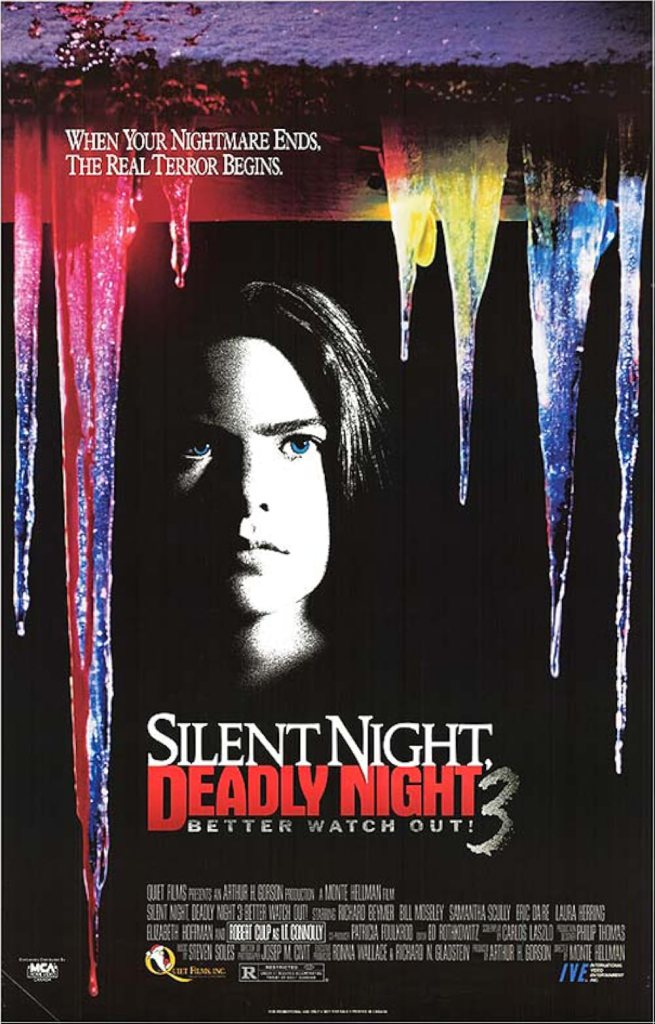
I appreciated Hellman’s fresh approach and higher production values, but unfortunately Part 3 is bad. It tries to maintain some connections with the previous films (Ricky didn’t die in Part 2; he was only in a coma; brief flashbacks to Part 1), and unlike Part 2 it actually has something to do with Christmas.
Ricky is pretty weird looking with the top half of his head replaced by transparent plastic so that the suspicious doctor can monitor his brain. And Monte Hellman tries to utilize his directorial strengths with atmosphere and minimalism.
The atmosphere is occasionally strong, like with the dark interiors and irregularly blinking Christmas lights at Grandma’s house. Hellman does succeed in making Christmas seem sinister.
But it’s not enough. The blind psychic heroine is annoying (I know, she’s supposed to be “angry”). The pacing is too slow. The killer, when he awakens, is just a robotic zombie. And, worst of all, the killings are just brief routine stabbings, nothing creative, and mostly out of nowhere without suspense.
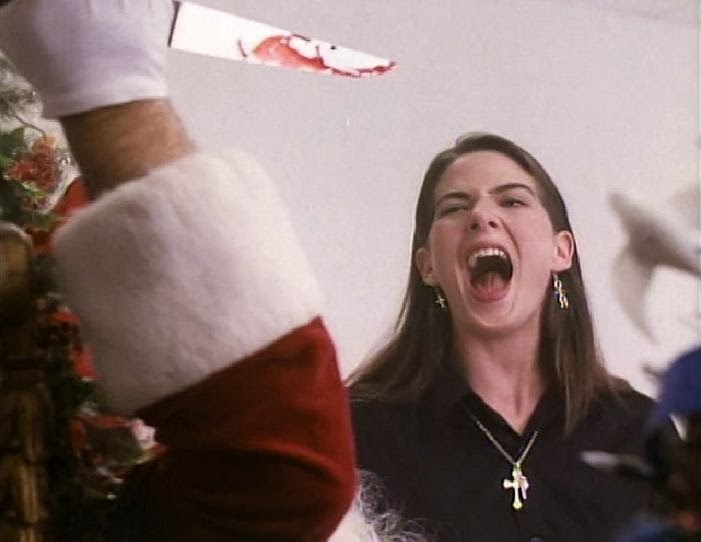
I was briefly intrigued by the sinister doctor who’s not such a bad guy after all. But I think his philosophy should have been set out earlier in the film, and his contrast with the lieutenant’s attitude made clearer. The lieutenant is the most likeable character. “Comatose… six years… how come he’s running around killing people?” My ratings would be 5, 6, 5, 4, 3.
I’m done with the series here, but Parts 4 and 5 are considered marginal improvements as the series dispenses with Ricky and changes directions. Blood Song (1982) also had a heroine with a psychic dream link to a killer who escapes his hospital.
Action: 6. Gore: 6. Sex: 5. Quality: 6. Camp: 6.
Don’t miss: From Part 3: Boris, briefly
Quotable line: From Part 2: “You tend to get paranoid when everyone around you gets dead.”
Article text copyright 2025 David Elroy Goldweber
 Claws & Saucers
Leave a comment