
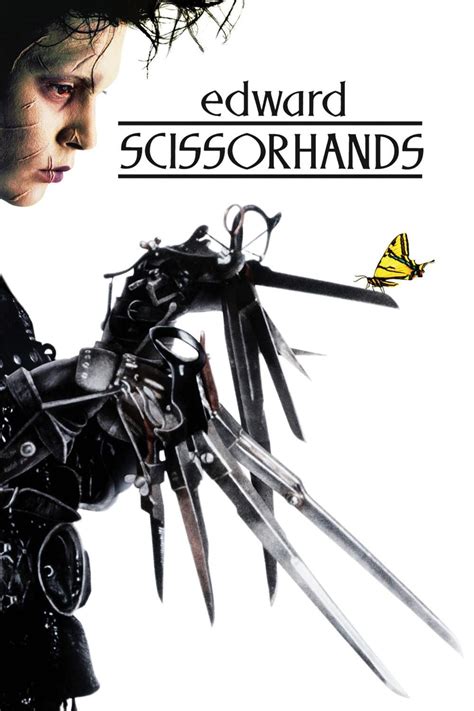
EDWARD SCISSORHANDS (Tim Burton, 105 min, color, 1990)
What’s Happening: An invented man is fated to have scissors for hands
Famous For: Last feature film appearance for Vincent Price
Writer-producer-director Burton’s first film, the six-minute “Vincent” (1982) had featured Vincent Price’s voice. Now, after the success of Pee-wee, Batman, and Beetlejuice, the great Burton got to direct Vincent Price live.
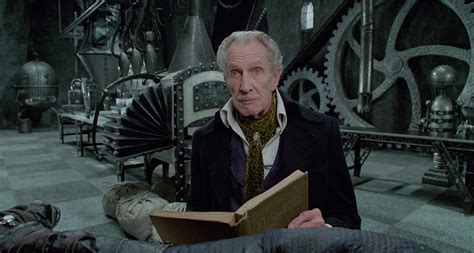
Price’s (flashback) scenes are brief, but it’s Price’s last feature film appearance (not counting a few voice performances before his death in 1993) and must be a milestone for all fans of classic genre film.
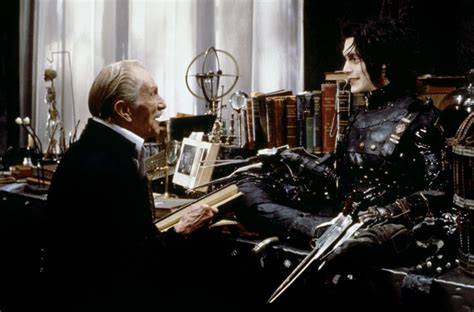
For many viewers, the flashbacks are the highlights, and we can only wish there were more of them. It’s a Gothic Beauty and the Beast castle but with 1930s Frankenstein equipment and machines.
The main character – as in all Burton’s best work – is a strange, powerful, lovable misfit. In some films, these misfits are energetic and humorous. Here, poor Edward is sad and slow. But thank goodness he’s so calm because he might at any moment damage or destroy anything around him – even himself.
What a fascinating idea, the scissors, how they make Edward pitiable yet frightening. It’s very strange, and it’s a tribute to Burton’s storytelling prowess – and to the great cast – that the film managed to overcome its strangeness and find such a large audience.
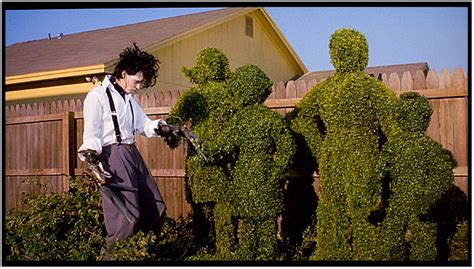
As Edward, Johnny Depp made his largest ever stride into the oddball roles for which he remains most admired. Cry-Baby gave Depp his first starring role in a feature film, but Edward Scissorhands was his first genre film – and his first with Burton.
This is also the first film in which Depp’s face is obscured by makeup to the point of unrecognizability. It’s pretty impressive that a guy so naturally handsome would grow so willing to cover and transform his natural face.
Winona Ryder is a rare American actress who not only played a series of good roles as a teenager but continued to land good roles into adulthood and middle age. My favorite is still Heathers (1988) but, as of this writing, she is best known for Stranger Things (2016-2019).
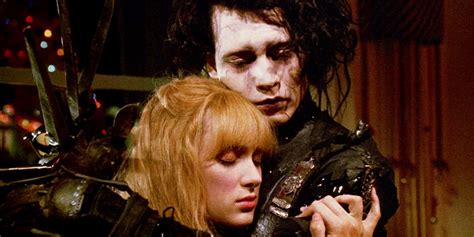
What’s disappointing is that Edward Scissorhands is less a Gothic fantasy than a satire of suburban conformism. It’s a fairly conventional satire at that, which is ironic given that conformism is what it purports to satirize.
It’s also overly artificial. Not only do we get perfectly manicured lawns, cookie-cutter houses, and pastel colors, but a community so close-knit that it seems a veritable island with no relation to any larger culture or society around it – including our own.
At least most townsfolk are welcoming rather than intolerant. And Burton doses everything with camp. He knows the satire isn’t profound. It’s a fine film even if it’s Burton’s most overrated.
Burton is a famously awkward speaker, but his director’s commentary isn’t bad. He mentions meeting Johnny Depp for the first time and recognizing that Depp possessed an “idea of misperception” that fit with the Edward Scissorhands character. Depp was a teen idol but didn’t feel that way inside.
Burton had originally conceived the character when he himself was a teenager. The main idea was that he had strong internal emotions but was unable to touch (i.e. feel) things around him.
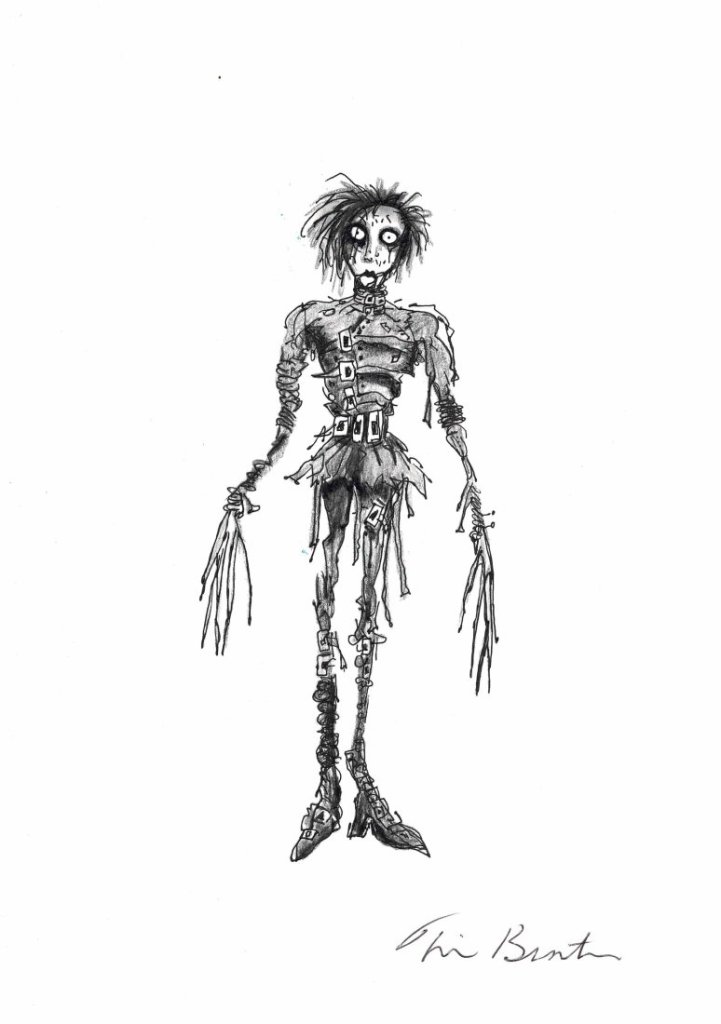
On one hand this resembles odd or misshapen characters from classic fairytales, but Burton got the idea for the scissors from things around him in his environment – perhaps from “pocket fisherman” ads on TV.
Unlike many directors in their commentaries, Burton at least briefly mentions themes. For the satire, the main theme is the “surface quality” of suburbia where you’re not sure what people are really feeling inside. In the story, as Edward tries to touch things around him, he helps the suburbanites enjoy a little spontaneity and creativity.
For me, the main theme was the isolation of the artist. Edward is the stereotypical artistic misfit taken to the extreme. It’s not simply his looks or habits that make him unusual; it’s his actual physical being that all but guarantees he cannot function among the rest of us.
Is this the eternal fate of the artist? The very qualities that enable the artist to create – and to delight others – also fate him to be isolated and shunned.
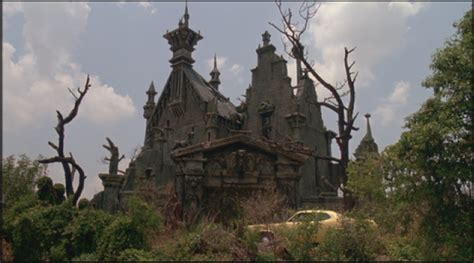
And as a Frankenstein fan, I enjoyed the reconception of the “artificial man.” Here, the man is created from mechanical parts, not flesh and bone. Yet when we see the inventor with a heart-shaped cookie, and when we see, among Edward’s possessions, an image of Mary and Baby Jesus, we can infer that Edward has a soul.
Note also the normality of the name “Edward.” This is not an eccentric or fabricated name; it’s something simple and normal. This suggests that the character might try or long to be a normal person living a normal life, even if it can never be.
Action: 6. Gore: 6. Sex: 4. Quality: 7. Camp: 5.
Don’t miss: Dog star
Notable misfortune: “You can’t buy the necessities of life with cookies.”
Article text copyright 2026 David Elroy Goldweber. Date of post January 2026.
 Claws & Saucers
Leave a comment